- +44 7778 394000
- clearwaxtoyou@gmail.com
- 71–75 Shelton Street, Covent Garden, London
Two popular methods exist for removing ear wax: microsuction and irrigation (syringing). While both remove wax, the differences in safety, comfort, and effectiveness are significant.
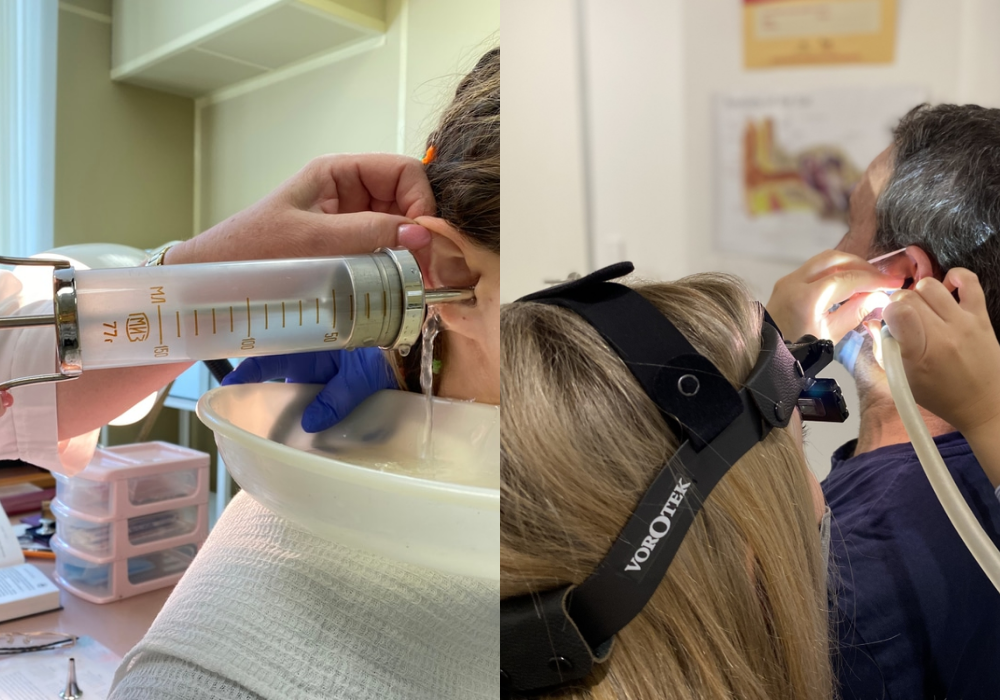
Irrigation involves flushing the ear canal with water or saline to remove wax. While widely used, it has potential drawbacks:
Risk of ear canal trauma
Discomfort during the procedure
Ineffectiveness for hard or impacted wax
Microsuction uses gentle suction and an endoscope to remove wax under direct vision. This method avoids water, reduces infection risk, and is suitable for almost everyone.
| Feature | Microsuction | Irrigation |
|---|---|---|
| Safety | Very safe under professional supervision | Higher risk of trauma or infection |
| Comfort | Generally painless | Can be uncomfortable, water pressure may hurt |
| Precision | High – direct visualization | Limited control, may miss wax |
| Children | Safe for ages 4+ | Not always suitable |
| Effectiveness | Removes wax in one session | May require repeat attempts |
| Equipment | Medical suction and endoscope | Syringe and water |
Gold standard method worldwide
No water used, reducing infection risk
Immediate results, often in a single session
Safe for children, elderly, and sensitive patients
While irrigation can work for some cases, microsuction offers superior safety, precision, and comfort. For anyone seeking professional ear wax removal, microsuction is the preferred choice.
Professional Ear Wax Removal at Your Doorstep
© 2025 ClearWaxToYou. All Rights Reserved.